• About
    • About
    • Meet the team
    • Tenant representation
    • Career
    • Awards
  • Our services
    • Transaction services
    • Project management
    • Workplace solution
    • Legal Services
    • Service charge audit
    • Valuation
    • Capital Markets
  • Sectors
    • Offices
    • Industrial & Logistics
    • Retail
    • Hotel & Tourism
  • Clients
    • Success stories
    • Videos
  • Knowledge
  • Contact
  • HU
  • Rólunk
    • Rólunk
    • Csapatunk
    • Bérlőképviselet
    • Karrier
    • Elismerések
  • Szolgáltatásaink
    • Tranzakciómenedzsment
    • Műszaki projektmenedzsment
    • Munkahelyi környezetoptimalizálás
    • Ingatlanjogi tanácsadás
    • Üzemeltetési költségvizsgálat
    • Értékbecslés
    • Ingatlanbefektetés
  • Szektorok
    • Iroda
    • Ipari és Logisztika
    • Kiskereskedelem
    • Hotel és turizmus
  • Ügyfelek
    • Sikersztorik
    • Videók
  • Tudástár
  • Kapcsolat
  • HU

Author Archive for Vass Emőke – Page 2

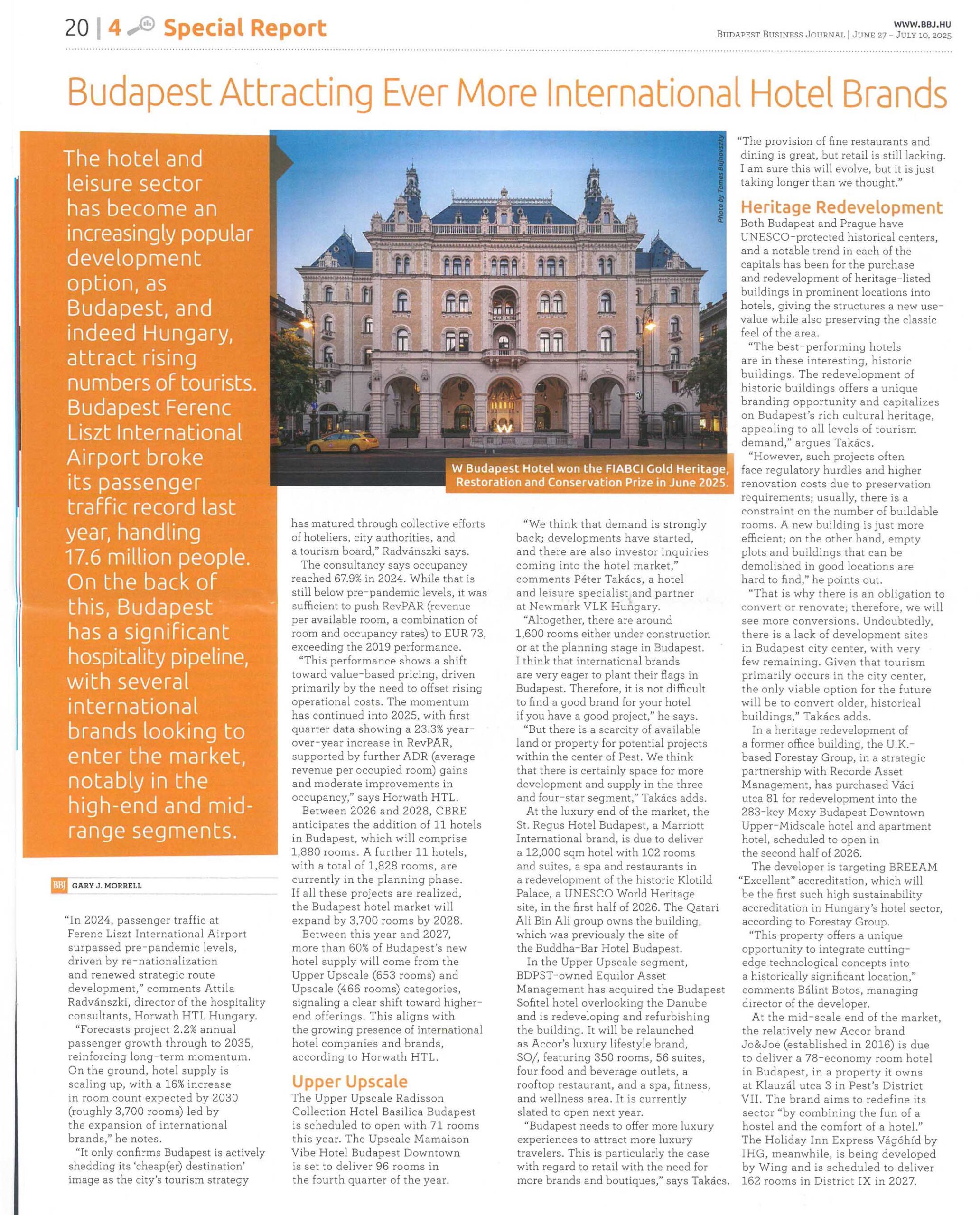
Budapest Attracting Ever More International Hotel Brands

By Vass Emőke
Monday, July 7th, 2025

The hotel and leisure sector has become an increasingly popular development option, as Budapest, and indeed Hungary, attract rising numbers of turists. Budapest Ferenc Liszt International Airport broke its passanger traffic record last year, handling 17.6 million people.
On the back of this, Budapest has a significant hospitality pipeline, with several international brands looking to enter the market, notably in the high-end and mid-range segments.

Upper Upscale

The Upper Upscale Radisson Collection Hotel Basilica Budapest is scheduled to open with 71 rooms this year. The Upscale Mamaison Vibe Hotel Budapest Downtown is set to deliver 96 rooms in the fourth quarter of the year.

“We think that demand is strongly back; developments have started, and there are also investor inquiries coming into the hotel market,” comments Peter Takacs, a hotel and leisure specialist and partner at Newmark VLK Hungary. “Altogether, there are around 1,600 rooms either under construction or at the planning stage in Budapest. I think that international brands are very eager to plant their flags in Budapest. Therefore, it is not difficult to find a good brand for your hotel if you have a good project,” he says.

“But there is a scarcity of available land or property for potential projects within the center of Pest. We think that there is certainly space for more development and supply in the three and four-star segment,” Takacs adds. At the luxury end of the market, the St. Regus Hotel Budapest, a Marriott International brand, is due to deliver a 12,000 sqm hotel with 102 rooms and suites, a spa and restaurants in a redevelopment of the historic Klotild Palace, a UNESCO World Heritage site, in the first half of 2026. The Qatari Ali Bin Ali group owns the building, which was previously the site of the Buddha-Bar Hotel Budapest. In the Upper Upscale segment, BDPST-owned Equilor Asset Management has acquired the Budapest Sofitel hotel overlooking the Danube and is redeveloping and refurbishing the building. It will be relaunched as Accor’s luxury lifestyle brand, SO/, featuring 350 rooms, 56 suites, four food and beverage outlets, a rooftop restaurant, and a spa, fitness, and wellness area. It is currently slated to open next year.
“Budapest needs to offer more luxury experiences to attract more luxury travelers. This is particularly the case with regard to retail with the need for more brands and boutiques,” says Takacs.
“The provision of fine restaurants and dining is great, but retail is still lacking. I am sure this will evolve, but it is just taking longer than we thought.”


Hotel - BBJ - Newmark VLK Hungary

For more information visit https://bbj.hu/

Categories : Hotel tourism

Giant Bicycles Opens First Concept Store in Budapest

By Vass Emőke
Monday, May 19th, 2025

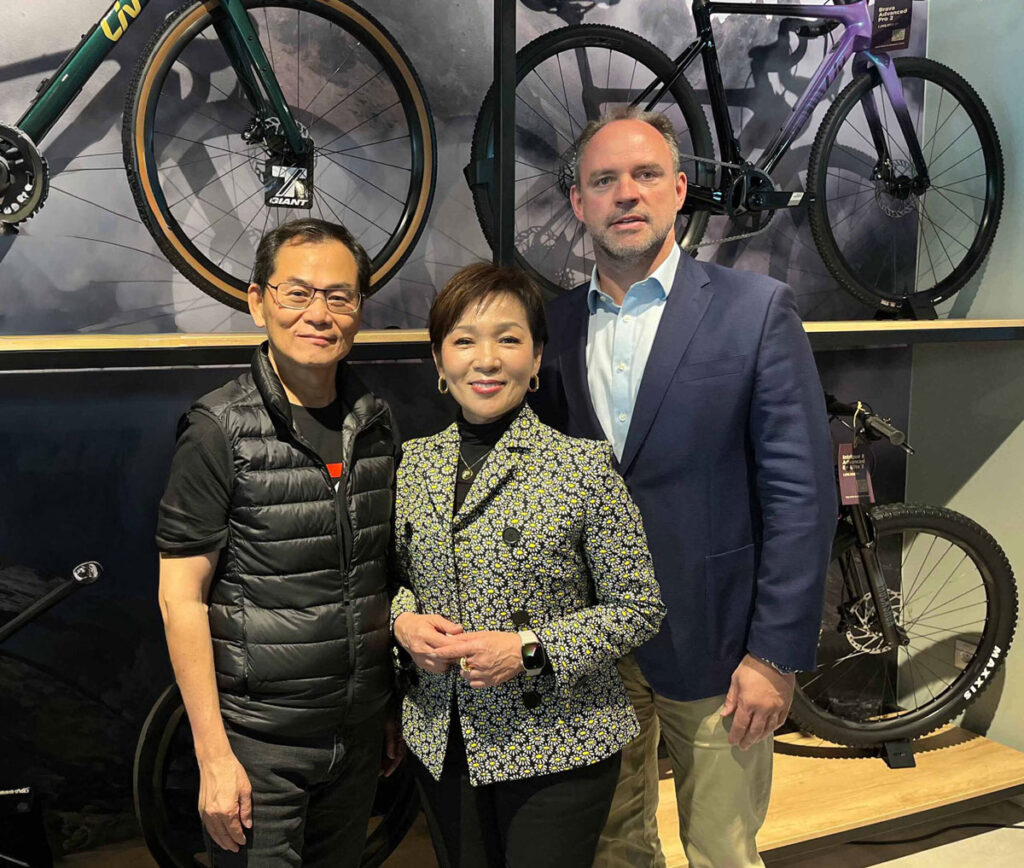
Giant Bicycles, one of the world’s leading bicycle manufacturers, has officially opened its first Hungarian concept store at Promenade Gardens, a prime office location on the Pest side of Budapest. The opening marks a major milestone for the brand’s retail presence in Central, Eastern Europe and Balkan States with a store of this nature and a strong commitment to supporting the ever – growing cycling community in Hungary.

Giant Group, the world’s largest bicycle manufacturer, established its second European production facility in Gyöngyös, Hungary, commencing operations in 2020. This €48 million investment spans 228,000 square meters with the aim to produce up to one million bicycles annually, including a significant number of e-bikes.

The new store highlights Giant’s commitment to Hungary as a manufacturing location and offers an immersive, premium experience and service oriented hub for retailing partners, cycling enthusiasts, from beginners to professionals.
With state-of-the-art service facilities, a wide selection of Giant, Liv and Momentum bicycles, high-quality accessories and components, and expert support. The store brings together innovation, performance, and community. Customers can also benefit from
on – site servicing, bike fitting, and personalized consultations.

“The Central and Eastern European region, and especially the Hungarian market, has always been a priority for us, so we want to establish as direct a relationship as possible with our customers and parties interested in cycling”” said Phoebe Liu, CEO of Giant Global Group.

“The location at Promenade Gardens was carefully selected for its accessibility, visibility, and premium urban environment,” said Valter Kalaus, Managing Partner at Newmark VLK Hungary. “We are thrilled that we could assist Giant in opening its first concept store in one of Budapest’s most modern and sustainable office buildings as we are ourselves avid cyclist and missed a store of this nature and offering form the local market”

The idea for this concept store opening was driven by the desire to increase the brand awareness among Hungarian customers and provide unprecedented services to all customers, in a country where Giant produces its bikes. This expansion aims to bring the brand closer to a wider audience across the city and further strengthen its presence in Hungary’s dynamic retail and mobility sectors.

https://www.portfolio.hu/ingatlan/20250519/a-giant-bicycles-megnyitotta-elso-koncepcio-uzletet-budapesten-762057

  • Giant VLKNewmark Storeopening3v2
  • Giant VLKNewmark Storeopening2
  • VLK Newmark - Giant Bicycles - store opening Budapest
Categories : Press, Retail

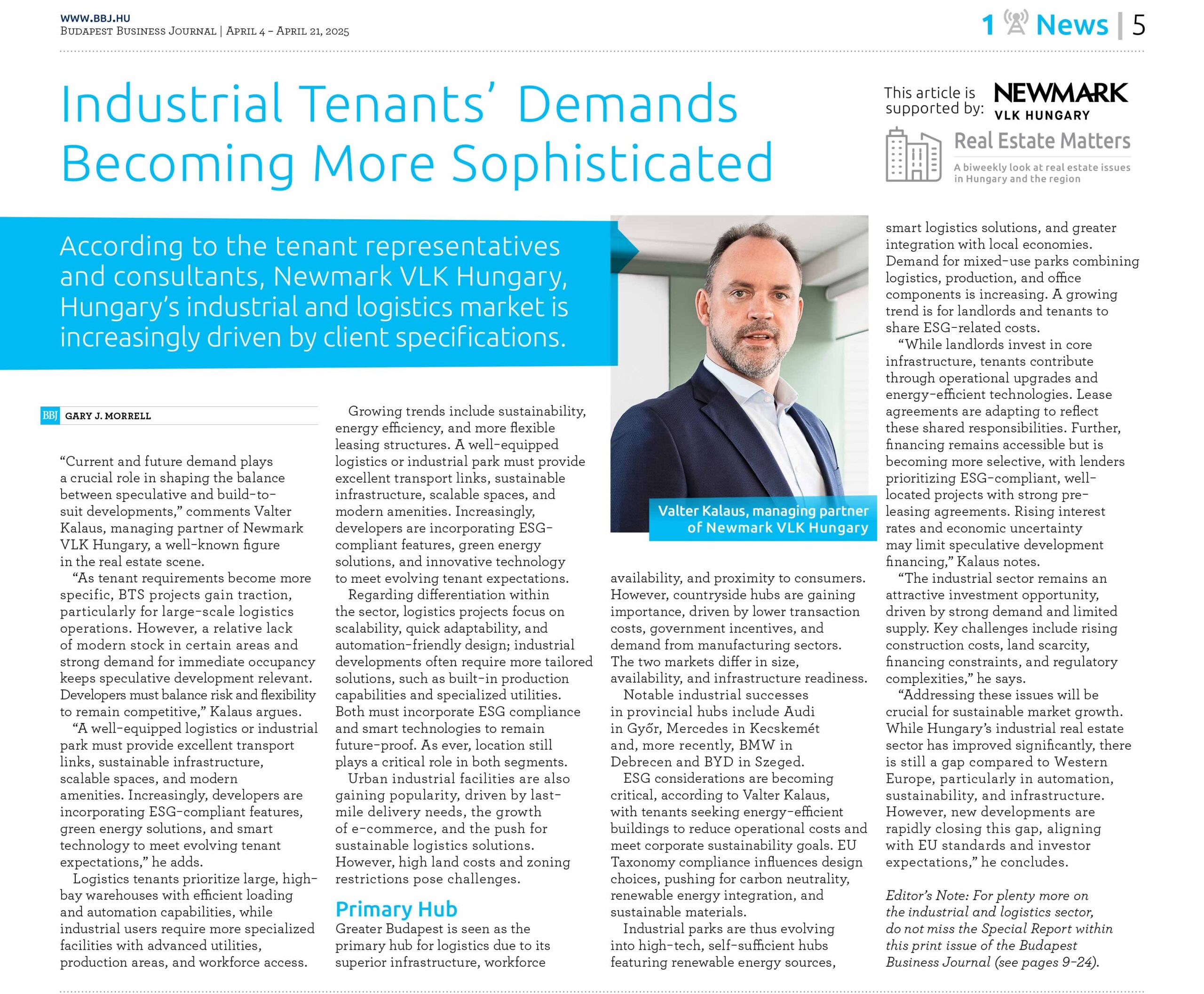
Industrial Tenants’ Demands Becoming More Sophisticated

By Vass Emőke
Tuesday, April 15th, 2025

According to the tenant representatives and consultants, Newmark VLK Hungary, Hungary’s industrial and logistics market is increasingly driven by client specifications.

“Current and future demand plays a crucial role in shaping the balance between speculative and build-to-suit developments,” comments Valter Kalaus, managing partner of Newmark VLK Hungary, a well-known figure in the real estate scene. “As tenant requirements become more specific, BTS projects gain traction, particularly for large-scale logistics operations. However, a relative lack of modern stock in certain areas and strong demand for immediate occupancy keeps speculative development relevant. Developers must balance risk and flexibility to remain competitive,” Kalaus argues.

“A well-equipped logistics or industrial park must provide excellent transport links, sustainable infrastructure, scalable spaces, and modern amenities. Increasingly, developers are incorporating ESG-compliant features, green energy solutions, and smart technology to meet evolving tenant expectations,” he adds. Logistics tenants prioritize large, high-bay warehouses with efficient loading and automation capabilities, while industrial users require more specialized facilities with advanced utilities, production areas, and workforce access.

Growing trends include sustainability, energy efficiency, and more flexible leasing structures. A well-equipped logistics or industrial park must provide excellent transport links, sustainable infrastructure, scalable spaces, and modern amenities. Increasingly, developers are incorporating ESG compliant features, green energy solutions, and innovative technology to meet evolving tenant expectations.

Regarding differentiation within the sector, logistics projects focus on scalability, quick adaptability, and automation-friendly design; industrial developments often require more tailored solutions, such as built-in production capabilities and specialized utilities. Both must incorporate ESG compliance and smart technologies to remain future-proof. As ever, location still plays a critical role in both segments.

Urban industrial facilities are also gaining popularity, driven by last-mile delivery needs, the growth of e-commerce, and the push for sustainable logistics solutions. However, high land costs and zoning restrictions pose challenges.

VLK Newmark -BBJ- Industrial

Primary Hub

Greater Budapest is seen as the primary hub for logistics due to its superior infrastructure, workforce availability, and proximity to consumers. However, countryside hubs are gaining importance, driven by lower transaction costs, government incentives, and demand from manufacturing sectors. The two markets differ in size, availability, and infrastructure readiness. Notable industrial successes in provincial hubs include Audi in Győr, Mercedes in Kecskemét and, more recently, BMW in Debrecen and BYD in Szeged.

ESG considerations are becoming critical, according to Valter Kalaus, with tenants seeking energy-efficient buildings to reduce operational costs and meet corporate sustainability goals. EU Taxonomy compliance influences design choices, pushing for carbon neutrality, renewable energy integration, and sustainable materials. Industrial parks are thus evolving into high-tech, self-sufficient hubs featuring renewable energy sources, smart logistics solutions, and greater integration with local economies. Demand for mixed-use parks combining logistics, production, and office components is increasing. A growing trend is for landlords and tenants to share ESG-related costs.

“While landlords invest in core infrastructure, tenants contribute through operational upgrades and energy-efficient technologies. Lease agreements are adapting to reflect these shared responsibilities. Further, financing remains accessible but is becoming more selective, with lenders prioritizing ESG-compliant, well located projects with strong preleasing agreements. Rising interest rates and economic uncertainty may limit speculative development financing,” Kalaus notes.

“The industrial sector remains an attractive investment opportunity, driven by strong demand and limited supply. Key challenges include rising construction costs, land scarcity, financing constraints, and regulatory complexities,” he says.

“Addressing these issues will be crucial for sustainable market growth. While Hungary’s industrial real estate sector has improved significantly, there is still a gap compared to Western Europe, particularly in automation, sustainability, and infrastructure. However, new developments are rapidly closing this gap, aligning with EU standards and investor expectations,” he concludes.

To read more articles visit bbj.hu

Categories : Industrial logistics

European Milestone Business Awards

By Vass Emőke
Thursday, April 10th, 2025

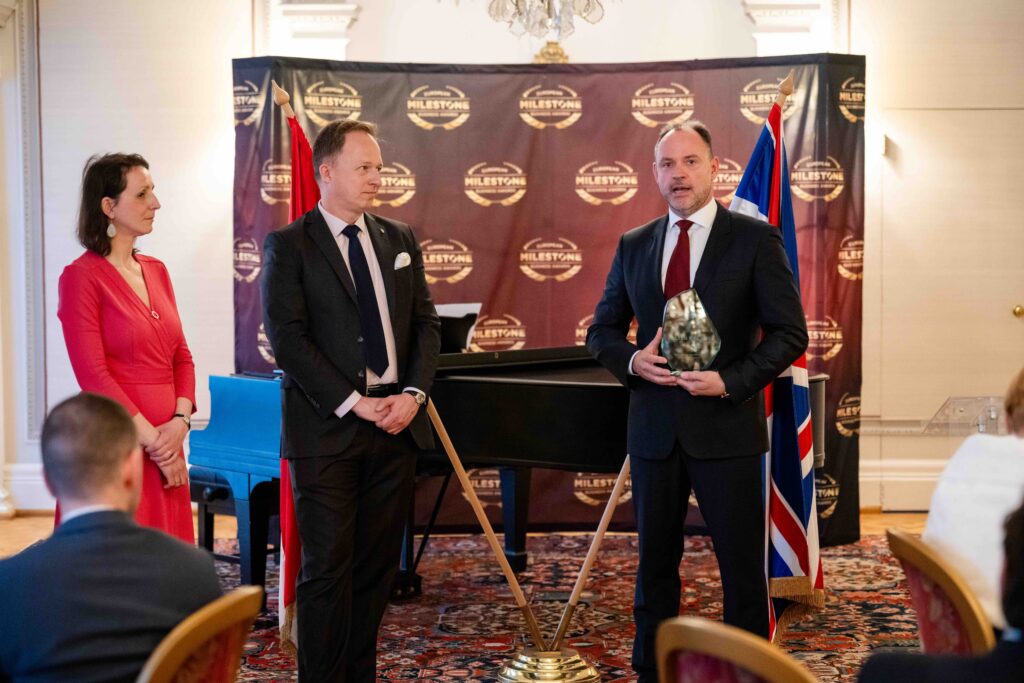
The European Milestone Business Awards is an international business awards ceremony held in London, where in 2025 ten Hungarian business leaders and companies were recognized for their outstanding, Europe-level achievements. The event was hosted by the Hungarian Embassy and was held for the third time.

Awards were presented in various categories, including strategic management, digital communication, and leadership excellence. The recognitions are given to business figures who have achieved significant long-term success on an international level.

The initiative grew out of the CEO Meetings tradition that has been running since 2001, and its aim is to recognize the international achievements of Hungarian companies while strengthening the global visibility of Hungary’s business elite.

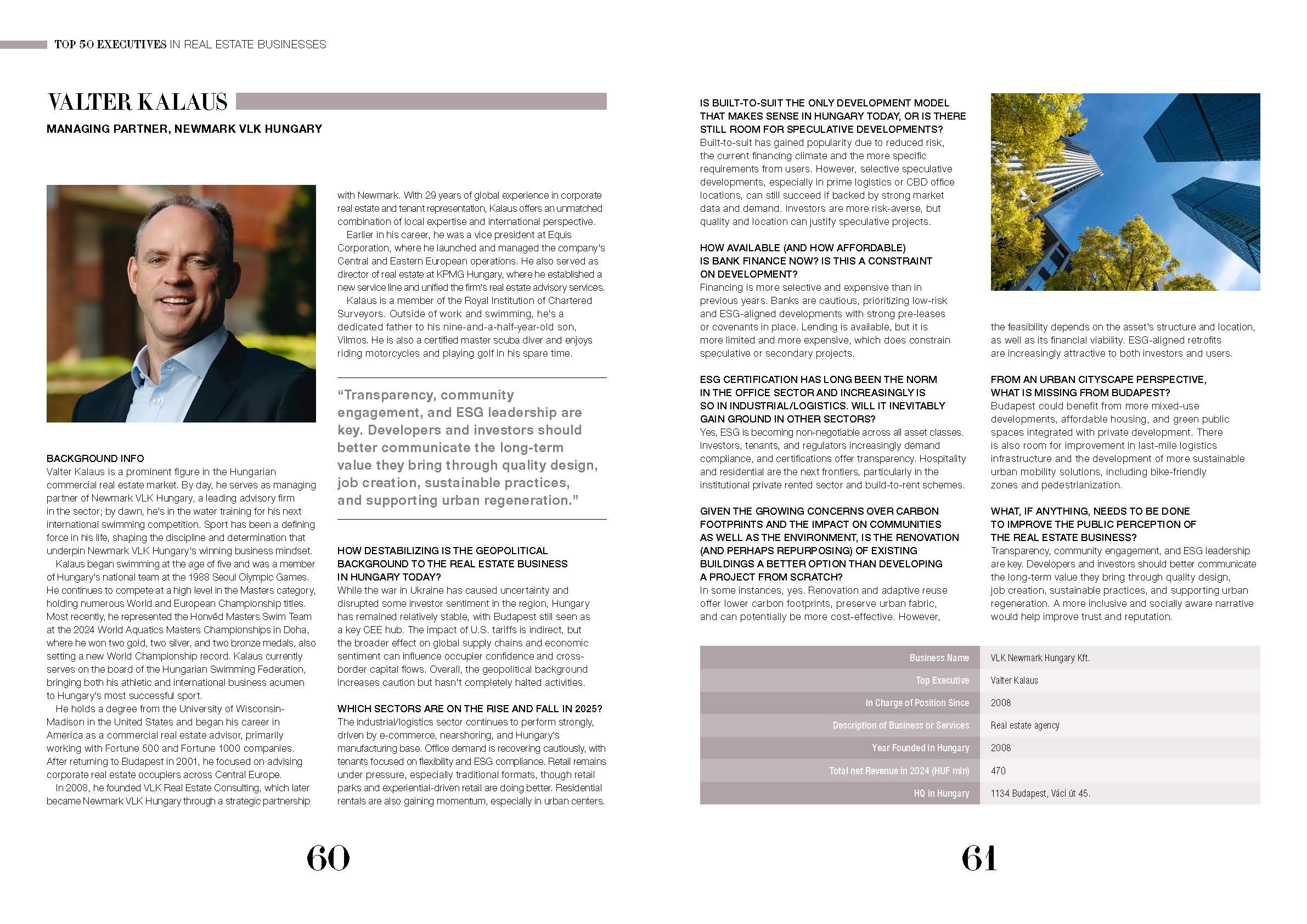
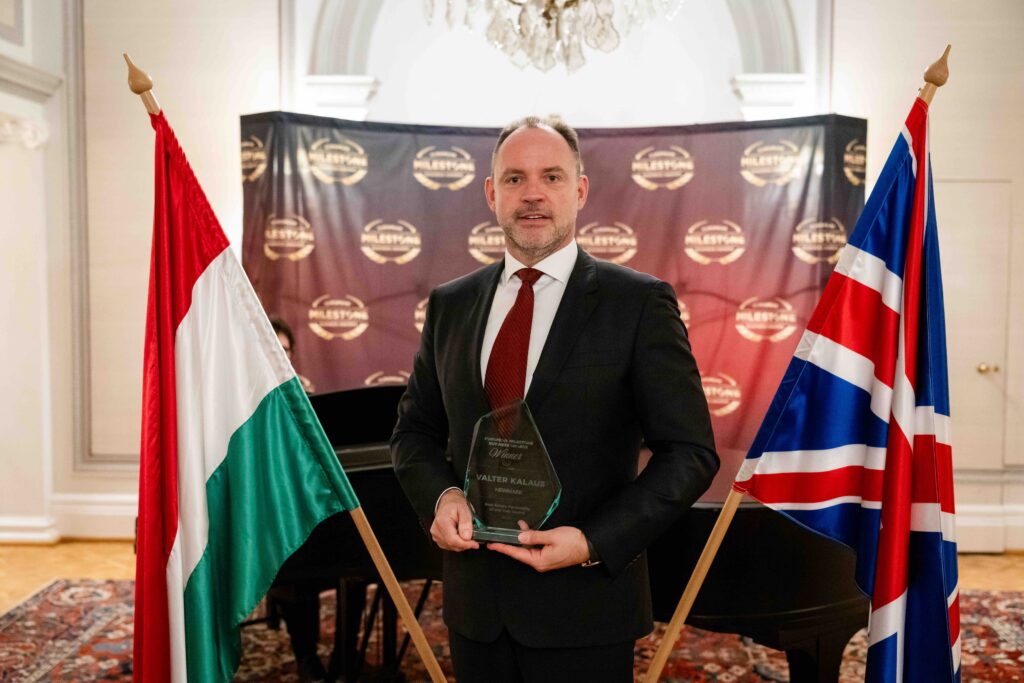
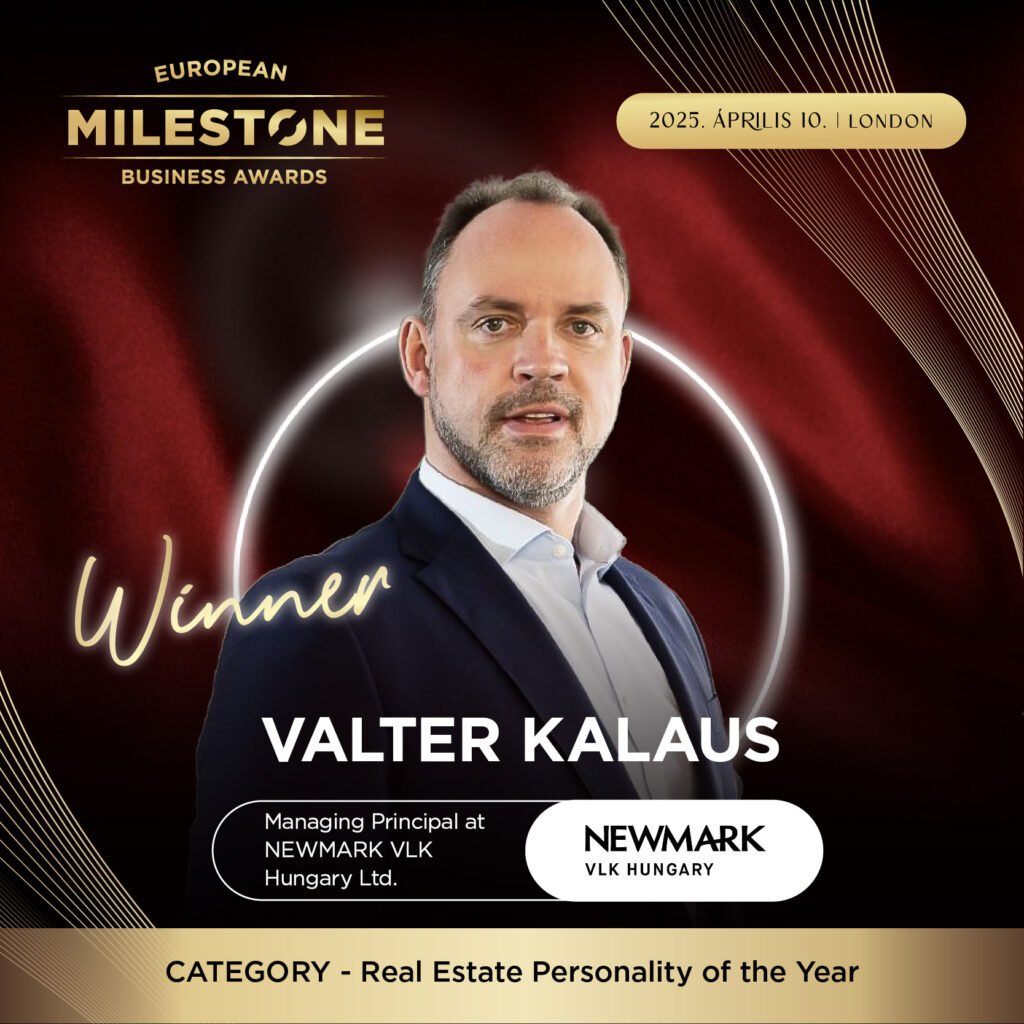
At the event, Valter Kalaus, managing partner of Newmark VLK Hungary, received the Real Estate Personality of the Year award.

To find out more click on the following link: https://kormany.hu/hirek/european-milestone-business-awards

  • Kalaus Valter
  • Valter Kalaus Winner95
  • Kalaus Valter - European Business Awards
Categories : Press

Delegates at Mipim Look at Sustainable Upturn

By Vass Emőke
Tuesday, March 25th, 2025

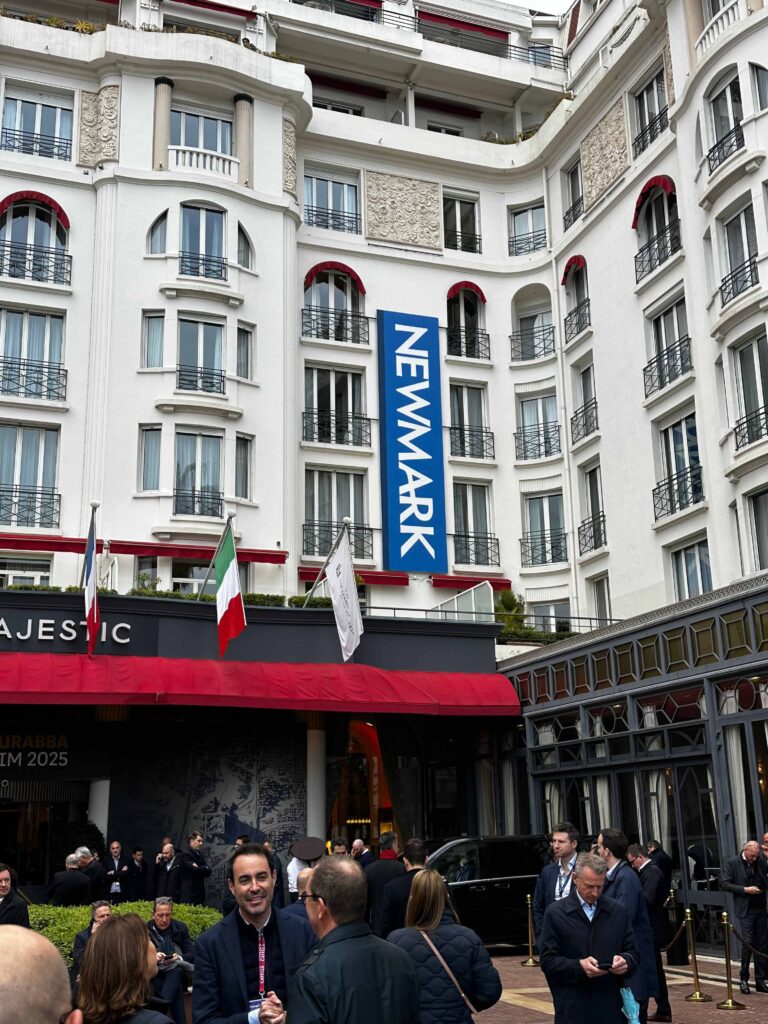
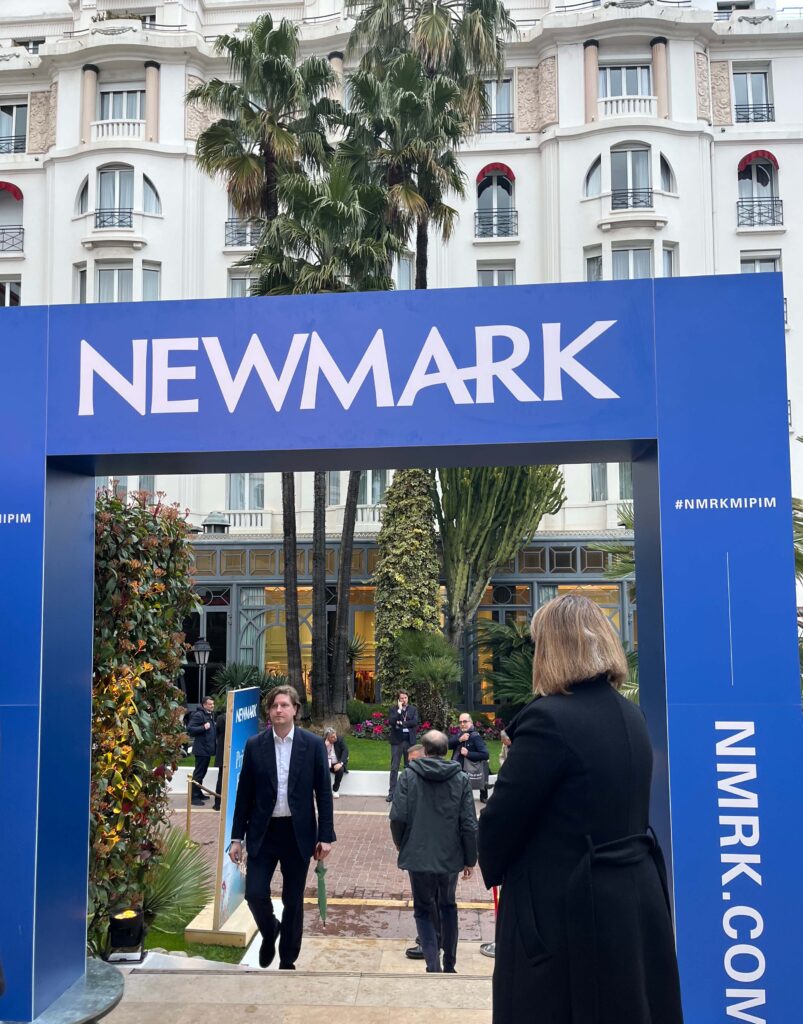
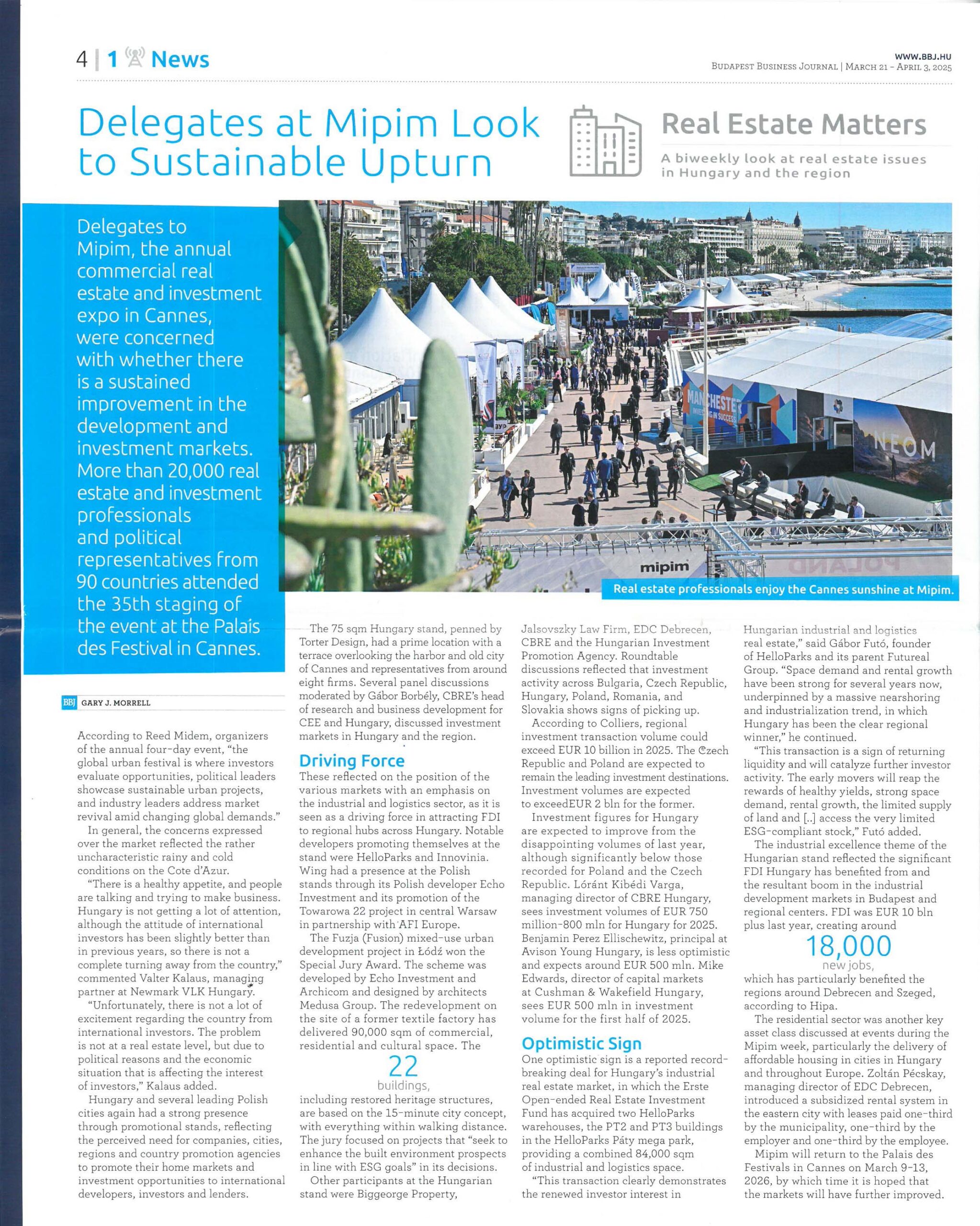
Delegates to Mipim, the annual commercial real estate and investment expo in Cannes, were concerned with whether there is a sustained improvement in the development and investment markets.
More than 20,000 real estate and investment professionals and political representatives from 90 countries attended the 35th staging of the event at the Palais des Festival in Cannes.

According to Reed Midem, organizers of the annual four-day event, “the global urban festival is where investors evaluate opportunities, political leaders showcase sustainable urban projects, and industry leaders address market revival amid changing global demands.” In general, the concerns expressed over the market reflected the rather uncharacteristic rainy and cold conditions on the Cote d’Azur.

“There is a healthy appetite, and people are talking and trying to make business. Hungary is not getting a lot of attention, although the attitude of international investors has been slightly better than in previous years, so there is not a complete turning away from the country,” commented Valter Kalaus, managing partner at Newmark VLK Hungary.

“Unfortunately, there is not a lot of excitement regarding the country from international investors. The problem is not at a real estate level, but due to political reasons and the economic situation that is affecting the interest of investors.” Kalaus added

To read more visit bbj.hu

  • MIPIM VLK Newmark 1 scaled
  • Newmark - MIPIM
Newmark VLK Hungary - MIPIM
Categories : Press

Beneath the Surface: Hidden Opportunities in Real Estate

By Vass Emőke
Wednesday, February 26th, 2025

According to Valter Kalaus, Managing Partner of NEWMARK VLK HUNGARY, the Hungarian real estate market is going through an exciting period: the significance of home office is decreasing, while barely any cranes are in operation across the capital. In a few years, there could be a shortage of modern office buildings, yet many tenants are hesitant to commit even in the medium term. What will happen to outdated buildings? What can we expect in the previously booming warehouse market? And how can we make the right decisions even in an uncertain economic environment? Among many other topics, we discussed these pressing questions.

  • As a tenant representative, you are well-acquainted with both the office and industrial markets. Let’s start with the office sector! Vacancy rates vary by submarket but are steadily increasing. However, all industry players agree that this is a normal cyclical pattern in the office market—far from a crisis. We’ve seen this before, and we will see it again. What is your take on this?
  • I fully agree with this perspective; I don’t see a dramatic situation. Compared to the pre-COVID era, when the market was thriving, many things have changed. Initially, the downturn was attributed to the pandemic, and now we are witnessing another phase of market adjustment. The reality is that very few new office developments are underway, meaning there is less new supply, while a significant amount of space remains vacant. That said, until the vacancy rate reaches 20%, there is no major issue. A 10-12% vacancy rate is still considered healthy, though the current 15% is slightly higher than ideal. However, it is crucial to examine what type of space remains unoccupied.
  • I assume it’s not the brand-new buildings, considering there are very few of them?
  • Even if a company wanted to move into a new office, they wouldn’t be able to before the second half of the year. Projects like CenterPoint 3 and Corvin Innovation Campus Phase 2 are still under construction, and the second phase of Skanska’s H2O development has just begun. Meanwhile, older, depreciated buildings are becoming less attractive. The bigger picture shows that relocation activity is low, with two-thirds of transactions being lease renewals or extensions. Overall, companies are hesitant to move, and in many cases, there aren’t many viable alternatives.
  • Many leases signed before COVID are now expiring. Do you think companies are holding back due to uncertainty?
  • COVID has changed office usage patterns, but now we see that leading global companies are making efforts to bring employees back into the office and reduce the prevalence of remote work. While there’s no radical shift, employers who previously required two office days per week are now moving to three, and those with three days are pushing for four.
  • Is this an alignment with former President Trump’s “return to the office” directive?
  • This trend started before that. It represents a significant change and raises several challenges. Many young professionals entered the workforce during the pandemic and started their careers in remote settings. They never experienced daily office life and are often reluctant to adopt it.
  • Landlords and office owners, of course, prefer full-time office presence.
  • Tenants and their employees expect high-quality amenities in office buildings, such as good cafeterias with reasonable prices. However, if offices are nearly empty on Mondays and Fridays, the remaining three days of lunch traffic between 11 AM and 2 PM must sustain the business. The same applies to other service providers within office buildings, making business planning highly unpredictable.
  • From an employer’s perspective, why is full-time office presence beneficial?
  • The rise of remote work has had negative HR implications. Young employees, who already have lower loyalty levels, struggle with in-person communication, don’t prioritize workplace affiliation, and often lack a sense of belonging. If they only work remotely with a laptop and phone, the employer itself becomes irrelevant. If a competitor offers just 10% more in salary, why wouldn’t they switch? Without in-person interactions, coffee breaks, casual conversations, or shared experiences, there’s no emotional attachment to the company. HR professionals recognize this issue—decreased retention leads to higher turnover, reducing efficiency and increasing costs.
Valter Kalaus - VLK Newmark
  • Previously, the industry standard was a five-year lease term.
  • Forecasting five years ahead is challenging now, and there’s no guarantee that an office chosen today will still be the right fit in three years. The more flexibility a landlord offers—both in terms of lease duration and space adjustments—the more likely they are to retain tenants.
  • Isn’t this where serviced offices come into play? They offer maximum flexibility and are gaining market share.
  • Serviced offices are indeed a great solution for short-term needs, such as project-based work or for startups experiencing rapid growth. However, I see their ideal usage period as being up to one year. If a company needs an immediate workspace, a serviced office allows them to start operations within days. We even tested this ourselves—during a minor renovation of our Váci út office, we relocated to a serviced office for two weeks.
  • Did it work out? What were your impressions?
  • While the provider did their best to accommodate us, we found it less appealing. Sharing with “strangers” reception, meeting rooms, kitchens, and printers was inconvenient. Beyond privacy concerns, for some companies, security risks arise from not knowing the rotating mix of neighboring tenants. Still, for short-term needs, serviced offices can be a viable solution, provided one is willing to pay higher fees for the convenience.
  • Several government agencies are set to move into new developments in Zugló, Dürer Quarter, and Budapart. What impact will this have on the real estate market?
  • They will vacate numerous outdated buildings in dire need of renovation. Depending on the property, the fit-out costs could range from €600 to €800 per square meter. To justify these investments, landlords would have to charge rents comparable to new developments, which the market may not accept. In many cases, converting these buildings into residential units, hotels, or student housing could be a more viable option.
  • How do you see the industrial real estate sector? Is it still more stable and profitable than the office market?
  • Before COVID, this sector was lagging, but it became one of the biggest winners during the pandemic due to the shift toward e-commerce. The demand for logistic hubs surged, driving a development boom. Although the initial frenzy has subsided, the industrial market remains attractive to investors. The expansion of automotive plants and suppliers outside Budapest is also creating new industrial hubs, reducing the market’s previous capital-centric nature. I anticipate continued healthy growth in this sector.
  • As an investment advisor, what do you currently recommend to your clients?
  • It depends on factors like budget, risk tolerance, and investment horizon. Beyond industrial real estate, well-located A-class office buildings still hold strong potential. Additionally, I see promise in strip malls, which gained popularity during COVID, and the hotel market, which continues to perform well.
  • Looking Ahead – So, would you say you’re optimistic?
  • Businesses will always need real estate, and there will always be tailored solutions for each company’s needs. The office market is undergoing an intriguing transformation—modernization, potential repurposing, and shifting workplace dynamics. However, opportunities still exist, and 2025 will present numerous possibilities for informed decision-making. Many hidden options are out there, waiting to be uncovered by the right expertise. That’s exactly what we do.
Categories : Industrial logistics, Office

Valter Kalaus achieved six podium finishes at the World Aquatics Masters Championships in Doha

By Vass Emőke
Wednesday, December 11th, 2024

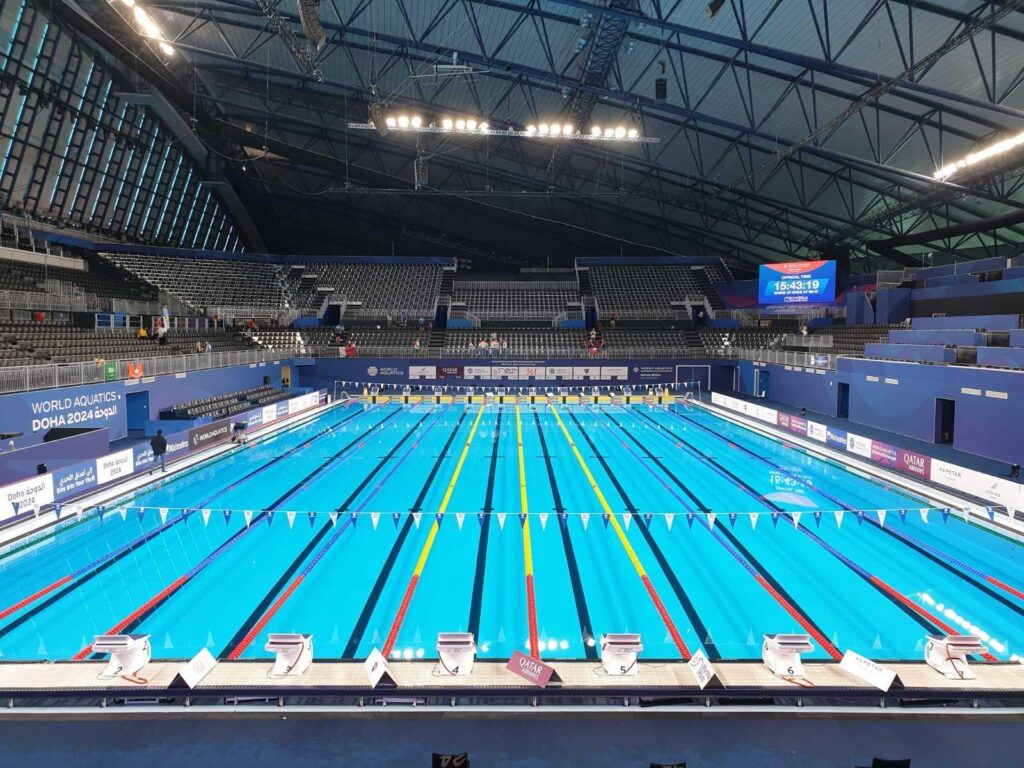
We are very proud that our Managing Director, Valter Kalaus, competed at the World Aquatics Masters Championships 2024 in Doha as a member of the Honvéd Masters Swim Team.

Valter won the 100 m and the 200 m freestyle events, earning two World Champion titles with Championship and Hungarian National record times. He also won two bronze medals in the 400 m and 800 m freestyle events with Hungarian National record times.
Additionally, as a member of the 4×50 m freestyle and 4×50 m medley relay teams they won 2 silver medals with Hungarian National record times!

Congratulations to Valter and to the entire Honvéd Masters Swim Team!

  • World Aquatics Masters Championships 2024 Doha
  • the pool Doha 2024
  • Medley
  • Freestyle
  • World Aquatics Masters Championship Doha 2024
Categories : Press

The Winners of the 2024 CRE AWARDS – EuropaProperty

By Vass Emőke
Wednesday, October 16th, 2024

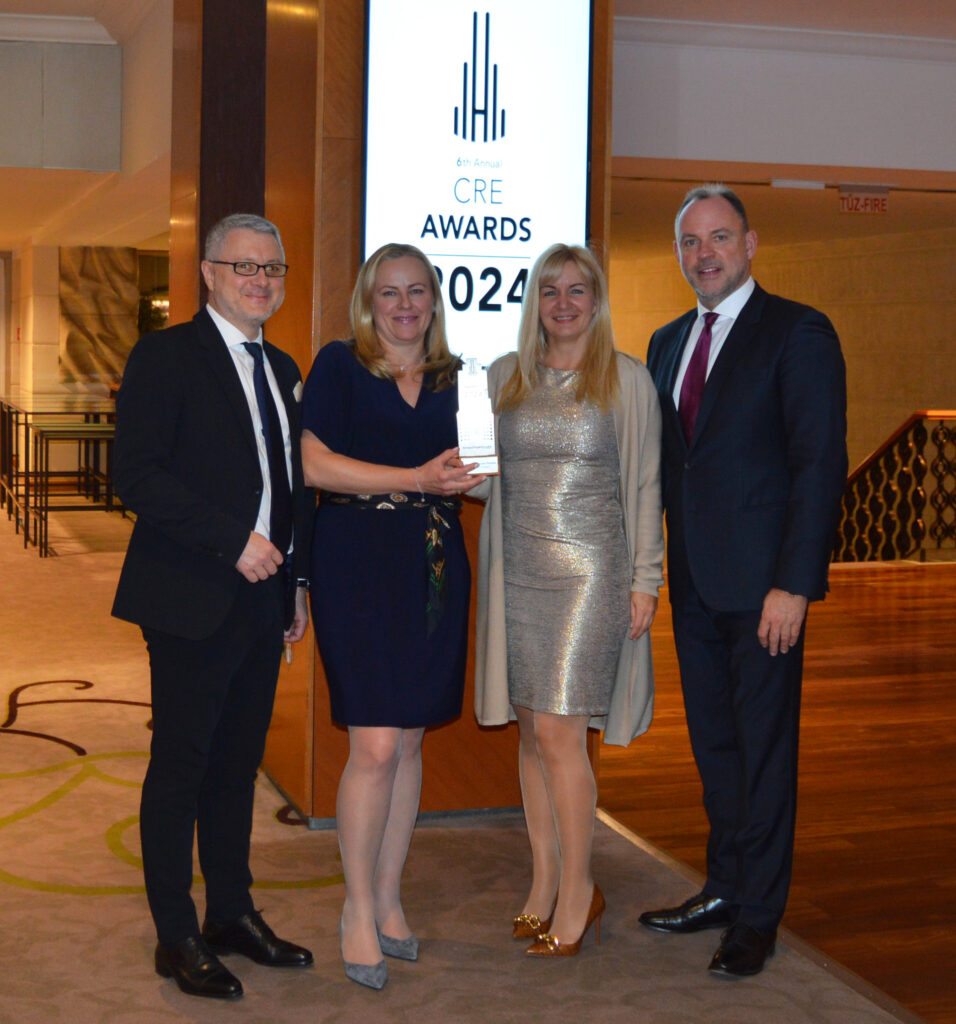
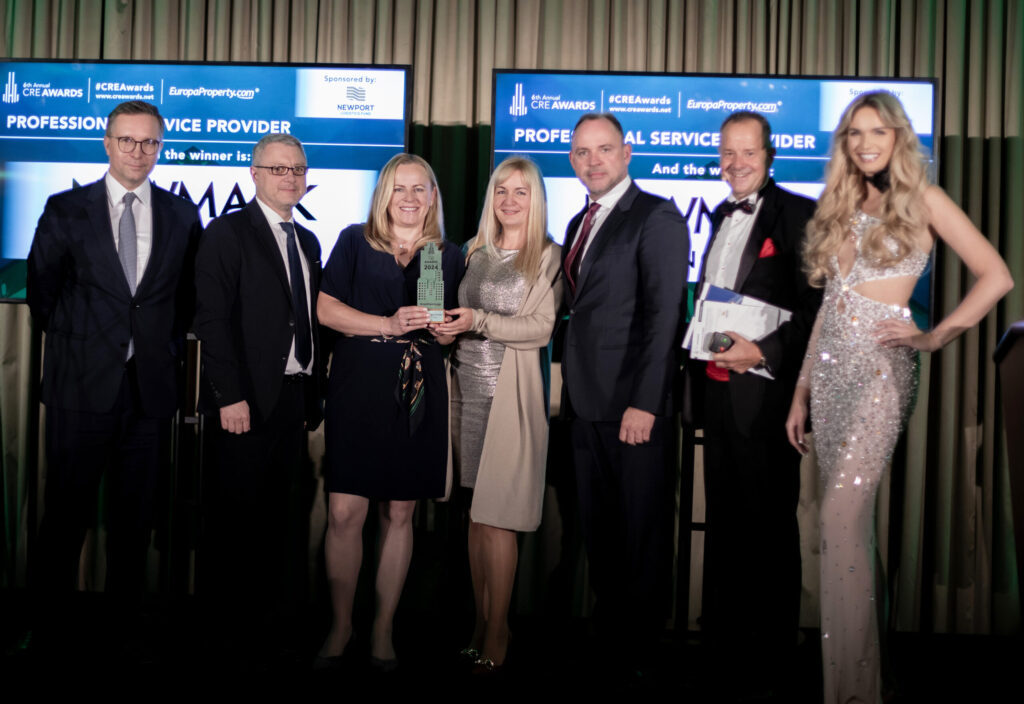
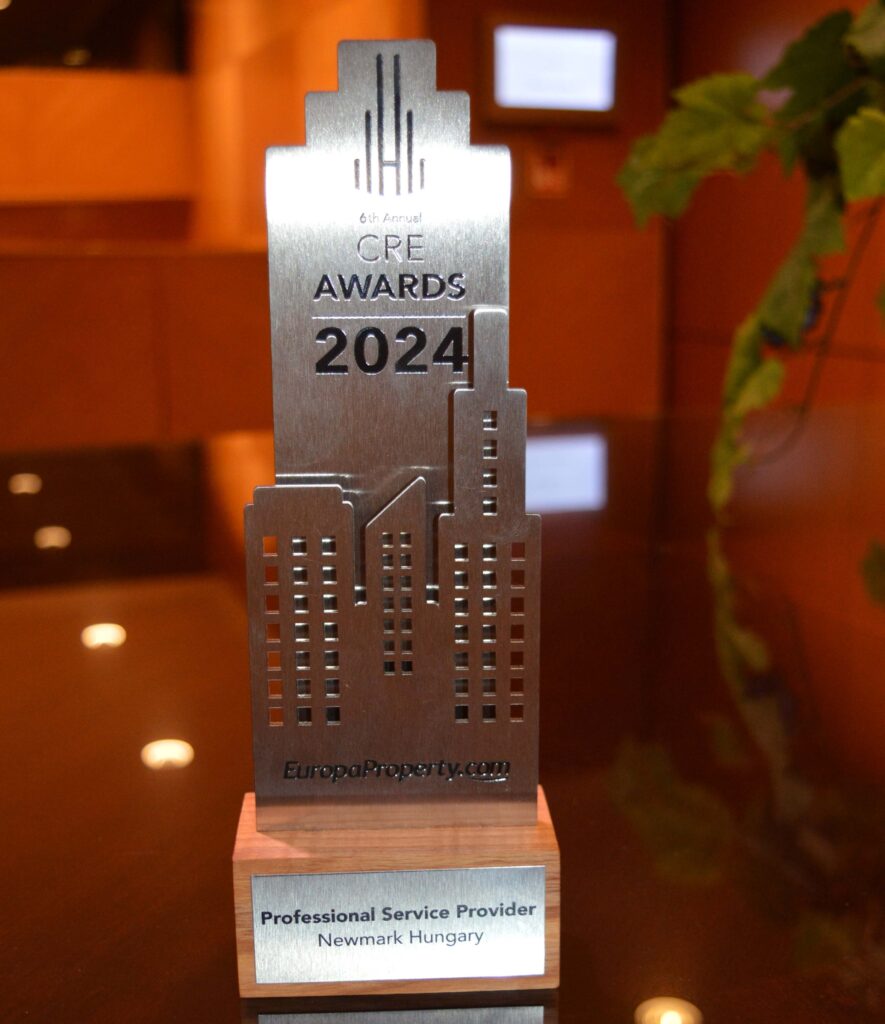
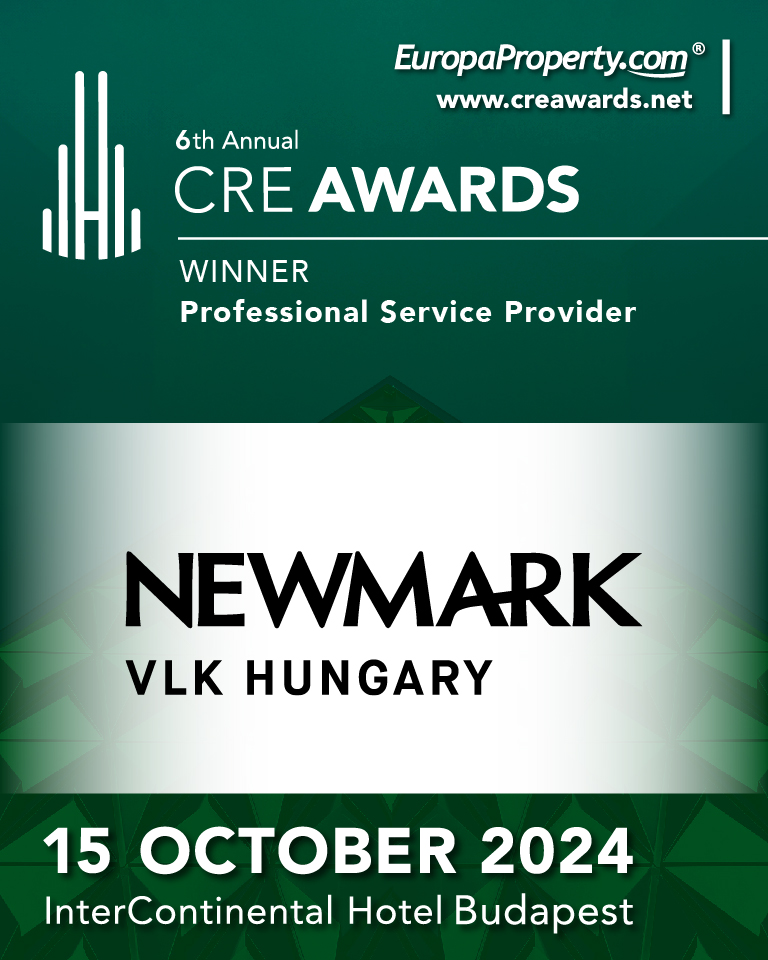
Newmark VLK Hungary – Professional Service Provider of the Year 2024

EuropaProperty hosted the 6th annual CRE Awards at the prestigious Intercontinental Hotel in Budapest, drawing a vibrant crowd of real estate leaders and professionals from Central and Eastern Europe. The event celebrated the industry’s brightest stars, recognizing innovation, development, investment, and management excellence.

Major winners of the 2024 CRE Awards included leading market players WING, NewWork, Futureal, K&H Bank, CBRE and Newmark…..

Newmark VLK Hungary received recognition from the jury for their substantial contributions to commercial real estate, securing the titles of Professional Service Provider of the Year.

To read more click on the link below:

https://europaproperty.com/announcing-the-winners-of-the-2024-cre-awards/

  • Newmark VLK Hungary CRE Awards Winner
  • VLK Newmark CRE Awards - Professional Service Provider
  • VLK Newmark CRE Awards - Professional Service Provider
  • VLK Newmark Professional Service Provider winner
  • VLK Newmark CRE Awards
Categories : Press

High Vacancy, Potentially Low Availability of ESG-compliant Offices

By Vass Emőke
Thursday, September 26th, 2024

Development in the Budapest office market is low, with developers exercising caution and new projects not being initiated in an uncertain and demanding financial environment. With overall vacancy rates rising and the development pipeline falling, concerns are being expressed over the longer-term availability of larger, contiguous, quality, well-located, ESG-compliant office space.

It is a complicated question as to what would need to be in place for a new Budapest office development to be initiated. Financing is crucial, and most banks require a 45-50% prelease for an office development,” comments Valter Kalaus, managing partner of Newmark VLK Hungary. His firm has acted as tenant representatives and consultants in the office market since 2002 and subsequently became active in the industrial, retail, hotel and leisure sectors.

He sees overall vacancy in the Budapest office at 14%, which could rise to 18% if owner-occupied stock is not included in the figure. The highest vacancy rate is in the periphery, while it is significantly lower in the most popular sub-markets such as the Váci Corridor, the Central Business District or inner Buda.

Valter Kalaus - VLK Newmark

Concerning the initiation of new projects, Skanska, for example, could undertake the second and third phases of H2Offices and the Hold utca office project if preleases are concluded; development will not start on a speculative basis. Few new office developments are expected to be undertaken in the next two to three years. An average letting size in the current market is 700-800 sqm of modern space in a good location.

“Location is still key: the office should be easily accessible, and its design should be tailored to the needs of the people working there, providing the right conditions for efficient working. Today, it is also a natural expectation that you should not have to travel long distances to reach services such as restaurants, cafés and shopping facilities during a break or after work. Proximity to a gym or beauty or barber shop can be an added advantage,” adds Kalaus.

The Upgrade Option One development option is upgrading an older office space to meet current ESG requirements from tenants. However, in many cases, mechanical systems can only be updated if the property is vacant and therefore, the tenant would be forced to transfer to a different building. The landlord is caught between keeping the tenant and undertaking a significant upgrade.

The conversion of an office complex to a hotel or residential block is also possible. A building owner needs to consider the physical viability of the conversion and its viability from a financial perspective. A three- or fourstar hotel conversion is seen as a possibility, depending on the size and location.

Despite the latest news from Amazon, the hybrid work model is seen as here to stay, with three to four days a week in the office seen as reasonable and well-balanced for team members. This encourages loyalty, brand awareness and teamwork, according to Kalaus.

He sees tenant requirements as related to elements such as mechanical systems, lighting, fresh air, and electric car charging systems. Offices must provide lounges, brainstorming and meeting rooms, as well as a large kitchen for internal gatherings. Many employers offer quality food, a free bar or café, breakfast, quiet areas and a nursery to provide their employees with a more enjoyable work environment. Leases now need to be flexible in terms of size and length. “ESG is now the hot topic, and the ‘E’ is the easiest to provide in offices with accredited space. ESG requirements apply to all market players, including landlords, tenants, lenders and facility managers,” Kalaus concludes.

To read more click on the following link: https://bbj.hu/

Categories : Office

Maintaining the City’s Architectural Feel Means Balancing Competing Needs

By Vass Emőke
Thursday, August 1st, 2024

Budapest faces the challenge of preserving its classic Central European “fin de siecle” look and atmosphere while developing its role as a modern city, business center, and tourist destination and, indeed, improving it as a pleasant and healthy place to live, work and visit. Meanwhile, industrial players face the challenges of developing in accordance with ever-stricter environmental regulations and locational demands from tenants in both the Greater Budapest area and provincial centers.

REVITALIZING THE NEGLECTED

“We have to protect our historic buildings, but some of them may be turned into modern office buildings while their facade still shows their original look,” remarks Valter Kalaus, managing partner at Newmark VLK Hungary.

BBJ - VLK Newmark - Office
BBJ - VLK Newmark - Office change
BBJ-Office - VLK Newmark
Categories : Office
« Previous Page
Next Page »

nmrk.com

Adatkezelési tájékoztató
Honlaphasználati feltételek
Impresszum

Kapcsolat

Newmark VLK Hungary
Váci út 45. | Átrium Park Irodaház
„D” épület 8. emelet
1134 Budapest

+36 1 632 1400 hungary@nmrk-global.com

Oldaltérkép

  • Szolgáltatások
  • Ügyfeleink
  • Tudástár
  • Kapcsolat

Kövess minket

Tagságok

A Newmark VLK Hungary, a Newmark Global partnereként, tagja a Newmark Global hálózatnak.

© Newmark VLK Hungary

created by verzar

nmrk.com

Privacy notice
Terms of Use
Impressum

Contact

Newmark VLK Hungary
Váci út 45 | Átrium Park Office
D building 8th floor
1134 Budapest

+36 1 632 1400 hungary@nmrk-global.com

Sitemap

  • Services
  • Clients
  • Knowledge
  • Contact

Follow Us

Membership

Newmark VLK Hungary, a Newmark Global Partner, is a member of the Newmark Global Network.

© Newmark VLK Hungary

created by verzar