During the Covid pandemic, working from home steadily gained ground, followed by a global return-to-office trend. Over the past one or two years, a balance has emerged within the hybrid working model, defining the proportion of time employees spend working in the office and from home. This summer’s heatwave, however, has rewritten the rules, as the energy systems of a significant proportion of office buildings, as well as urban infrastructure, are not prepared for such extreme weather conditions.
This summer brought exceptionally extreme weather, with records also being broken in Hungary. In two separate heatwaves, extraordinary and prolonged heat persisted for more than a month in total. At the same time, the water level of the Danube reached another record low: due to the summer drought, a level of just 9 centimetres was recorded at the Vigadó Square gauge in Budapest on 2 August. Meanwhile, a significant proportion of the units at the Paks Nuclear Power Plant also had to be shut down.
According to data from MAVIR, Hungary’s electricity transmission system operator, the heatwave resulted in a new all-time summer peak in electricity demand, with consumption approaching levels normally seen during winter heating peaks. Grid operators reported two to three times more system failures than usual during the heat, resulting in outages and equipment failures.
Solar power systems also reached historic production peaks during the summer heatwave. However, due to limitations in the grid’s capacity to absorb the electricity generated, feed-in had to be restricted in order to maintain system stability. At the same time, according to data from Budapest Waterworks, water consumption during peak heat periods increased fivefold compared with average days. The capacity of the pipeline network was unable to keep pace with demand, resulting in water restrictions in some municipalities.
Crisis Management in the Office Market
It was therefore no coincidence that the government asked households to avoid using high-power appliances during peak evening and night-time periods and to exercise restraint in their water consumption. To help maintain energy security, major consumers also achieved significant reductions in electricity consumption during the most critical periods.
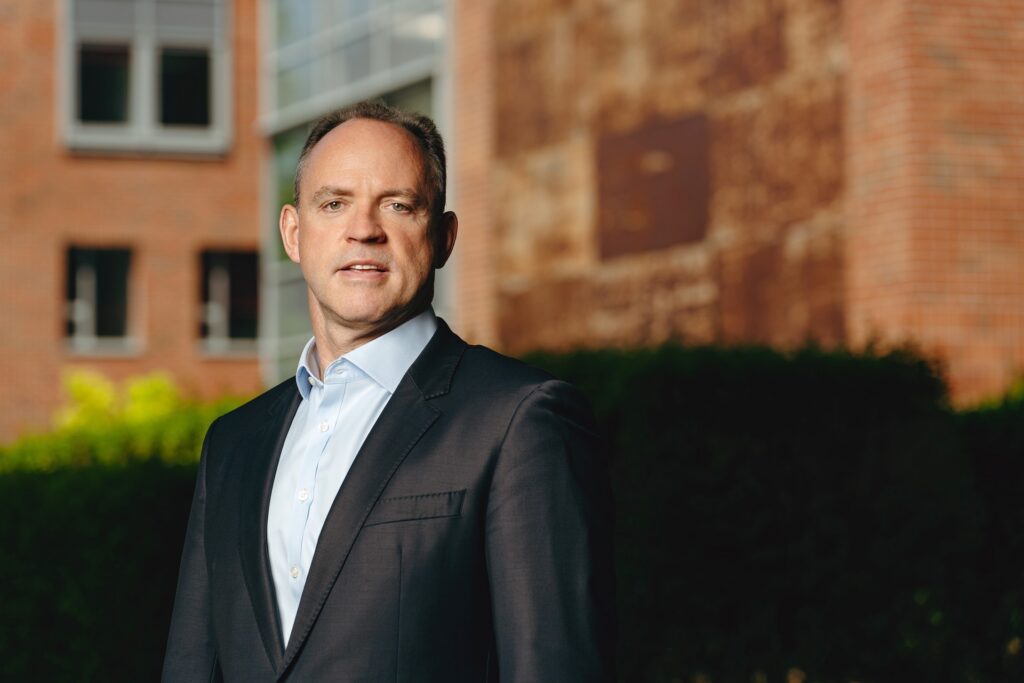
“Operators and tenants also experienced a number of challenges in the commercial real estate sector. Energy efficiency and the optimisation of water consumption became particularly important in shopping centres and office buildings, where systems came under considerable pressure due to increased visitor and tenant presence. In addition, the overloading of urban infrastructure itself represented a potential risk, meaning that the operation of building complexes was exposed to risks arising from the vulnerability of municipal and national utility networks,” explained Valter Kalaus, Managing Director of Newmark VLK Hungary.
To address these challenges, the operating parameters of cooling, ventilation and lighting systems in office buildings were adjusted. However, there was no uniform protocol, as Hungary’s office stock varies considerably in terms of quality and technical standards, which is why office buildings are classified into categories such as Class A, B and even C.
“While older buildings with outdated mechanical systems were almost powerless against the extreme heat, modern office buildings with international green certifications such as LEED or BREEAM, and correspondingly advanced building systems, were able to manage the heat crisis much more flexibly through intelligent shading, thermally activated building systems (TABS) and their own solar power systems. By using collected greywater, these buildings were also able to reduce the burden on the municipal drinking water network,” added Valter Kalaus.
Working from Home Flourished Again
In a number of office buildings, tenants were asked to avoid excessive energy consumption on certain days. In some cases, they were even encouraged not to come into the building at all and, where possible, to return to working from home — a previously popular form of working.
It was therefore no coincidence that during certain critical weeks of the summer, companies repeatedly introduced home-working arrangements and other energy-saving measures in response to the exceptional heat and difficulties affecting water and energy supplies.
These measures not only reduced the energy costs of office buildings but can also be regarded as preventive measures to protect the utility networks and avoid disruptions caused by the overloading of Budapest’s and Hungary’s infrastructure. Office buildings were therefore able to reduce operating costs while simultaneously easing pressure on the networks.
“A paradoxical situation emerged. In the years following the pandemic, tenants and office building owners had been working together to create increasingly comfortable, flexible and welcoming workplaces focused on experience-driven services and incorporating the benefits of modern digital infrastructure. Yet during the more challenging periods, employees were instead encouraged to work from home,” added Valter Kalaus.
What Does the Future Hold?
The energy and water infrastructure serving office buildings operated close to the limits of their capacity this summer. The prolonged heat dome exposed critical structural weaknesses that made immediate restrictions unavoidable.
This is particularly important because, in recent years, sustainability has become a key priority in the fight against global warming, while compliance with ESG criteria has become a fundamental expectation in the business world.
In the real estate investment market, investors make investment decisions based on ESG reporting and acquire properties with a particular focus on office buildings with recognised green certifications. The green transition — implementing sustainable, environmentally responsible construction and property management — represents a major challenge across Europe and, of course, in Hungary as well.
The European Union has set the ambitious objective of achieving a zero-emission building stock by 2050, meaning that the operation and construction of buildings should ultimately result in no carbon dioxide emissions.
The transition towards zero-emission buildings is governed by phased requirements applying to both new and existing buildings. Gas-powered equipment and technical solutions are being replaced by renewable alternatives such as heat pumps and geothermal energy. These form part of sustainable infrastructure supplied by green energy, which also includes electric vehicle charging points.
“However, new questions have now emerged that tenants also need to consider before relocating to a new office or expanding or optimising their existing office space. The question is no longer simply what sustainable solutions a building offers, but also how capable it is of operating independently from urban infrastructure — for example, through stormwater retention using intensive green roofs, or by supplying electric vehicle charging stations with electricity generated by the building’s own solar power system,” emphasised Valter Kalaus.
How will office buildings be able to cope with extreme weather fluctuations in the future? What technical and digital developments will be required? And how will urban infrastructure itself be able to manage these critical periods?
Many questions remain unanswered. What is clear, however, is that property owners and building operators will need to continuously implement risk-management measures, predictive solutions and technical upgrades.